Before the Warning: Why God Is Calling Us to Prepare Our Souls Today
Source type: Author's interpretation
There is a question that has been on my heart for some time. It is a question I believe every Christian should ask, regardless of whether he follows Catholic prophecy or has ever heard of the Illumination of Conscience.
If I were to stand before Jesus Christ today and see my entire life in the light of His truth, would I be ready?
Not tomorrow. Not after I have corrected my mistakes, reconciled with those I have hurt, or finally found more time for prayer.
Today.
I do not ask this question as someone who has achieved holiness. Far from it. I am an ordinary Catholic, conscious of my weaknesses, my sins, and the many occasions when I have failed to respond to God's grace.
Yet the more I reflect upon Scripture, the message of Divine Mercy, and the accounts of private revelations throughout Christian history, the more I become convinced of one thing: we should not postpone our conversion.
There is no need to predict the date of a great supernatural event to recognize the urgency of preparing our souls.
And perhaps this is where our reflection on the Warning should begin.
What Is the Illumination of Conscience, Also Known as the Warning?
The Illumination of Conscience, often called the Warning, is a proposed future spiritual event described in certain Catholic private revelations and prophetic traditions.
According to these accounts, humanity may experience an extraordinary moment in which each person becomes deeply aware of the true condition of his or her soul before God.
Imagine seeing your life without excuses, self-deception, or the comforting explanations with which we so often justify our behavior.
Every act of selfishness. Every failure to love. Every opportunity to do good that was ignored. Every wound inflicted upon another person.
But also every sincere act of charity, every hidden sacrifice, every prayer offered in suffering, and every moment when we responded to God's grace.
All of it illuminated by truth.
Those who speak about the Warning often describe it as an extraordinary act of Divine Mercy, a spiritual awakening intended to call humanity to repentance.
It is important, however, to make a distinction. The Illumination of Conscience, understood as a future worldwide event, is not an established doctrine of the Catholic Church. Its specific descriptions come from private revelations and their interpretations.
The Church teaches that every person will face judgment before God. It does not teach that a worldwide Warning must first occur.
Nevertheless, reflecting upon this possibility can lead us toward something unquestionably Catholic: examination of conscience, repentance, reconciliation, and trust in Jesus Christ.
And these are things we should never neglect.
Is the Warning Mentioned in the Bible?
When discussing the Illumination of Conscience in the Bible, we must be careful not to claim more than Sacred Scripture actually reveals.
There is no biblical passage explicitly predicting a worldwide event under the name the Warning.
However, Scripture repeatedly speaks about God's light revealing the hidden condition of the human heart.
In 1 Corinthians 4:5, Saint Paul teaches that the Lord will bring hidden things to light and disclose the intentions of hearts.
In Hebrews 4:12–13, we encounter the image of God's Word penetrating the deepest parts of our being. Nothing in creation is hidden from His sight.
And in John 3:19–21, Christ speaks about the relationship between light, truth, and the human response to God.
These passages do not prove that the Illumination of Conscience will happen as described in private revelations. They do, however, establish a profound spiritual truth.
God sees us as we truly are, even when we struggle to see ourselves.
This thought should not lead us to despair. It should inspire humility.
God already knows our sins, weaknesses, and failures. Yet He continues to call us to Himself.
We cannot surprise Him with our misery.
And we cannot exhaust His mercy.
The Warning of Garabandal: A Call to Examine Our Lives
One of the best-known sources associated with the Warning is the account of the alleged Marian apparitions in San Sebastián de Garabandal, Spain, between 1961 and 1965.
The young visionaries reported experiences involving the Blessed Virgin Mary, and the tradition surrounding Garabandal includes a future Warning, a Miracle, and a possible Chastisement.
According to accounts attributed to the visionaries, the Warning would be experienced throughout the world and would confront people with the spiritual consequences of their sins.
For many Catholics interested in prophecy, Garabandal has therefore become closely associated with the Illumination of Conscience.
Yet we must approach this subject with obedience and prudence. The alleged supernatural character of the Garabandal events has not received official Church recognition.
I believe a Catholic should never place personal enthusiasm for an apparition above fidelity to the Church.
If a message encourages us to pray, repent, receive the sacraments, and love our neighbor, these are good actions in themselves. But their goodness does not automatically establish the supernatural origin of the message.
Perhaps the most valuable question we can ask when reading about Garabandal is not, "When will the Warning happen?"
It is this:
"What would I change in my life if I truly believed that I could meet God at any moment?"
That question has the power to transform our daily lives.
Saint Faustina, Divine Mercy, and the Time of Conversion
For me, one of the most important spiritual connections to the subject of the Warning is the message of Divine Mercy associated with Saint Faustina Kowalska.
Saint Faustina, a Polish religious sister canonized by Pope John Paul II, became known throughout the world through her Diary: Divine Mercy in My Soul.
Her writings continually direct our attention toward the mercy of Jesus Christ and the need for complete trust in Him.
The image of Divine Mercy bears the words:
Jesus, I Trust in You.
These simple words contain an entire spiritual program.
Trust means recognizing that salvation does not come from our own strength. It means admitting our sins without hiding from God. It means believing that His mercy is greater than our weakness.
Some writers connect Saint Faustina's descriptions of divine illumination and the coming of Christ with the proposed Warning. Such connections should be presented as interpretations, not as proof that she predicted the precise event described at Garabandal.
What is beyond doubt is the importance of the message of Divine Mercy for Christian life.
We must not mistake God's patience for indifference toward sin.
His mercy calls us to conversion, not to complacency.
I sometimes wonder how many people delay confession because they are afraid to confront their past.
Yet confession is not an encounter with humiliation for its own sake. It is an encounter with the mercy of Christ.
If we sincerely repent, God does not ask us to remain imprisoned by our sins.
He invites us to return home.
Are Contemporary Catholic Prophecies Warning Us About the End Times?
In recent years, many Catholics have become interested in alleged messages associated with figures such as Luz de Maria de Bonilla and Pedro Regis.
Their reported messages frequently concern prayer, conversion, moral disorder, suffering, and events interpreted in connection with the end times.
Some readers believe these messages point toward an approaching period of profound spiritual and historical upheaval.
Others remain skeptical of their supernatural origin or question particular predictions.
As Catholics, we must acknowledge that distinction.
A reported message is not the same thing as an authenticated revelation, and neither should be confused with the deposit of faith.
The Church has established procedures for discerning alleged supernatural phenomena. Its 2024 norms emphasize the importance of examining doctrinal content, spiritual fruits, and possible dangers.
Even a nihil obstat does not ordinarily constitute a declaration that an alleged event is supernatural.
I believe we should read such messages with prayerful discernment, without automatically accepting every claim or dismissing every spiritual exhortation.
We should also resist the temptation to interpret every war, earthquake, political crisis, or extraordinary event as certain fulfillment of a particular prophecy.
History has taught us how easily human beings can misread the signs of their own times.
The Christian is called to vigilance, but vigilance is not the same as constant fear.
If a message inspires us to return to the Rosary, attend Holy Mass, make a sincere confession, or reconcile with our family, we can respond to those good invitations without claiming certainty about its supernatural origin.
Our foundation must remain Jesus Christ and the teaching of His Church.
Why the Warning Should Lead Us to Hope, Not Fear
There is something deeply moving about the idea of a soul suddenly seeing itself in the light of God.
At first, such a possibility may seem terrifying.
We know our weaknesses. We remember our failures. There are moments in our lives that we would rather forget.
The Watchman · free newsletter
Are you spiritually prepared for the Illumination of Conscience?
Get the free 12-Point Preparation Checklist (PDF) and weekly notes on messages, Church teaching and spiritual preparation.
But the Christian understanding of God's truth cannot be separated from His love.
Jesus Christ did not come into the world merely to expose human sinfulness. He came to save sinners.
He suffered, died, and rose again so that humanity could be reconciled with the Father.
If we reflect upon the Illumination of Conscience as a possible act of mercy, we should remember this essential truth.
The purpose of repentance is not to remain overwhelmed by guilt.
It is to return to God.
In the parable of the Prodigal Son (Luke 15:11–32), the father does not wait for his son with a list of punishments.
He runs to meet him.
This image should accompany every serious reflection on the Warning.
God's truth may reveal painful things about us, but His mercy offers the possibility of a new beginning.
That is why I believe spiritual preparation should begin with trust rather than panic.
How to Prepare for the Warning: A Catholic Approach
We do not need to know whether the Illumination of Conscience will take place tomorrow, in many years, or whether the specific prophetic descriptions will ever be fulfilled.
The essential preparation remains the same.
1. Make a sincere examination of conscience
Set aside a few minutes each evening to review the day in God's presence.
Ask yourself where you have loved well and where you have failed to love.
Do not search for excuses. But do not fall into despair either.
A good examination of conscience should lead to repentance and trust.
2. Return to the Sacrament of Confession
If you have been away from confession for many years, consider speaking with a priest.
Do not allow shame to keep you from God's mercy.
A general confession, made with appropriate spiritual guidance, may be helpful for some people, particularly after a long absence from the sacrament. It is not necessary for everyone, and previously absolved sins do not ordinarily need to be confessed again.
3. Receive the Eucharist with reverence
The Holy Eucharist is at the heart of Catholic life.
Whenever possible, attend Holy Mass faithfully and prepare to receive Holy Communion worthily, in accordance with the teaching of the Church.
The greatest preparation for meeting Christ is to live in communion with Him now.
4. Pray the Holy Rosary
The Rosary invites us to contemplate the life, death, and Resurrection of Jesus through the eyes of His Blessed Mother.
Even one decade prayed attentively can help bring peace to a troubled heart.
Mary always leads us toward her Son.
5. Practice forgiveness and reconciliation
It is possible to read many prophecies and still neglect the person living beside us.
We may follow every reported apparition and yet refuse to forgive a brother, a spouse, or a friend.
This contradiction should concern us.
Preparation for the Warning must include our relationships with other people.
Where reconciliation is possible and safe, take the first step.
6. Perform works of mercy
Feed the hungry. Visit the lonely. Help someone who is suffering. Support a person who cannot repay you.
Faith must become visible through love.
We should never become so fascinated by extraordinary future events that we overlook the suffering immediately before our eyes.
7. Entrust your life to Jesus Christ
Every morning, offer your day to God.
Ask Him to guide your decisions, purify your intentions, and protect you from spiritual pride.
We cannot make ourselves holy through anxiety or speculation.
Holiness grows through grace and our cooperation with it.
What If the Illumination of Conscience Never Happens as Predicted?
This question deserves a sincere answer.
If the worldwide Warning described in certain private revelations never takes place, would our preparation have been wasted?
Certainly not.
A person who has returned to confession, begun to pray, reconciled with loved ones, and developed a deeper relationship with Christ has lost nothing.
On the contrary, such a person has gained something of immeasurable value.
This is one reason I believe we should be careful about predicting dates or presenting speculative events as inevitable.
Our faith does not depend on the fulfillment of a particular private prophecy.
It depends on Jesus Christ.
And whether we live to see extraordinary events or spend our lives in relative peace, we will all eventually stand before God.
The time to learn how to love Him is now.
Before the Warning, There Is Still Time to Return to God
I write these words not as a prophet, a theologian, or someone who possesses special knowledge about the future.
I write them as a Catholic who believes that the condition of the human soul matters infinitely more than our ability to predict world events.
I believe we live in a time when many people have forgotten the importance of sin, repentance, prayer, and eternal life.
But I also believe that God has not abandoned humanity.
His mercy remains available.
His invitation has not been withdrawn.
The confessional is still open. The Holy Mass is still celebrated. The Gospel is still proclaimed. The Blessed Virgin Mary continues to be honored by the faithful.
And Christ continues to call us to Himself.
Perhaps the Warning will occur in the way certain visionaries have described.
Perhaps the future will unfold differently from what we expect.
I do not know.
But I know that I should not wait for an extraordinary sign before taking my faith seriously.
I should pray today.
I should repent today.
I should forgive today.
I should love God today.
Because the greatest tragedy would not be failing to predict the Warning. It would be hearing God's call to conversion and continually postponing our response.
May the Lord grant us the humility to recognize our sins, the courage to change our lives, and the grace to trust in His infinite mercy.
Jesus, I trust in You.
Amen.
Frequently Asked Questions About the Warning
Is the Illumination of Conscience an official Catholic teaching? No. The proposed worldwide Illumination of Conscience is associated with certain private revelations and prophetic interpretations. The Catholic Church teaches about judgment, repentance, and the necessity of conversion, but it does not require belief in a future worldwide Warning.
What is the difference between the Warning and the Last Judgment?
In accounts of the Warning, the event is generally described as an illumination experienced during earthly life, allowing an opportunity for repentance. The Last Judgment is an established teaching of the Catholic faith concerning Christ's definitive judgment at the end of history.
Did Saint Faustina predict the Warning?
Saint Faustina wrote about Divine Mercy, the need for conversion, and spiritual experiences involving divine light. Some writers connect these themes with the Warning, but such interpretations should not be confused with an explicit, doctrinally established prediction of the Garabandal event.
How can Catholics prepare spiritually for the Warning?
Catholics can prepare through prayer, sincere examination of conscience, sacramental confession, worthy reception of the Eucharist, works of mercy, forgiveness, and a deeper relationship with Jesus Christ. These practices are valuable regardless of whether the predicted Warning occurs.
Should Catholics believe the messages of Luz de Maria or Pedro Regis?
Catholics are not required to believe private revelations. Reported messages should be evaluated carefully in light of Scripture, Church teaching, and the competent ecclesiastical authorities. They should never replace the Gospel or the sacramental life of the Church.
Author's note: This article reflects a personal Catholic meditation on the Illumination of Conscience and related private revelations. It is not an official statement of the Catholic Church. Alleged revelations are discussed with respect for ecclesiastical discernment and without claiming certainty about future events.
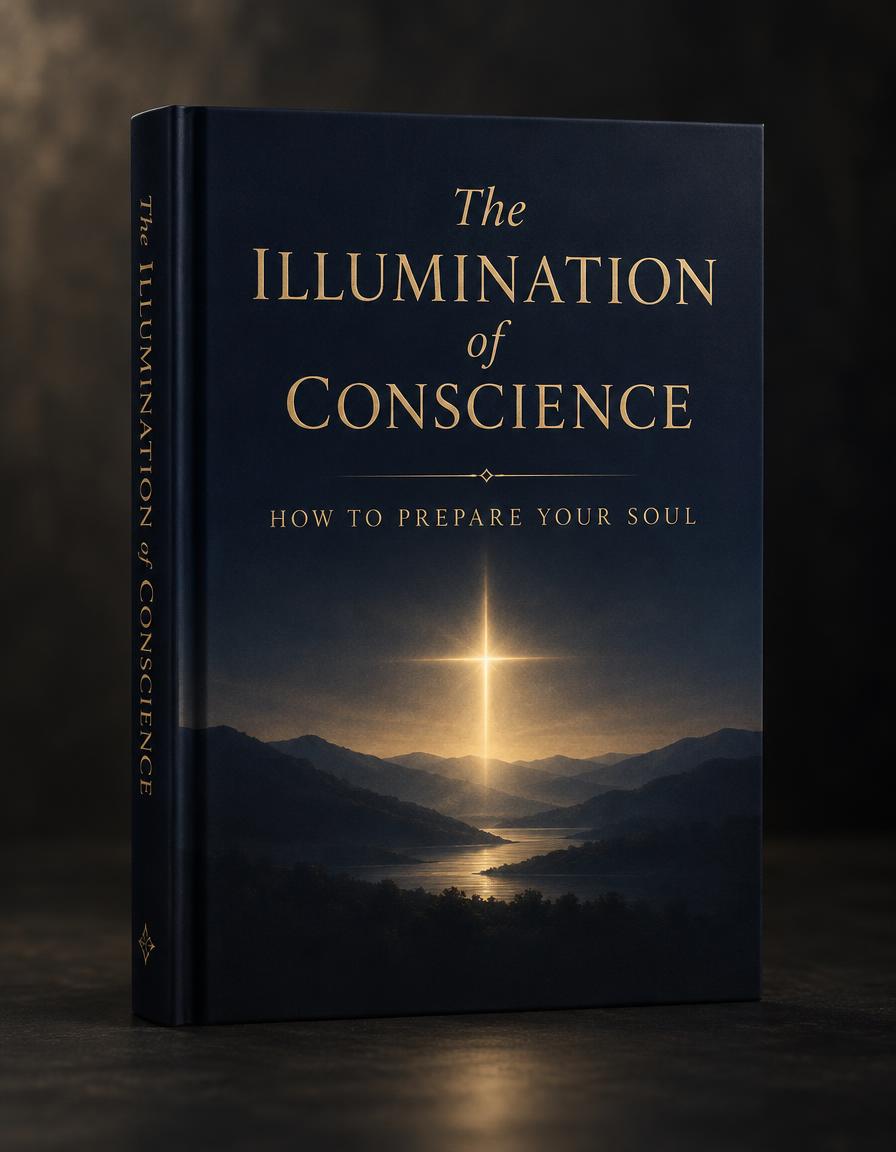
If you want to understand the Warning, its prophetic background and how to prepare spiritually, read the complete book.